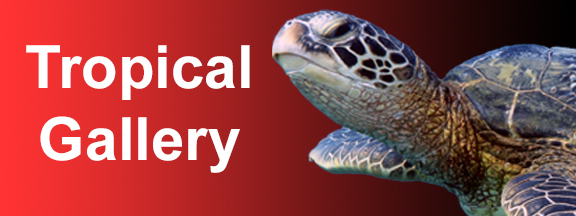

My wife got me into diving years ago, much to her regret. We went to Hawaii on our belated honeymoon and did quite a bit of snorkeling. We would get up every morning around 6:30 and snorkel an hour before breakfast in the warm waters off Maui. Although we both thuroughly enjoyed the snorkeling, she decided it would be much more exciting to actually swim underwater with the turtles and rays rather than just see them from the surface. Upon our return to Seattle, she bought us both scuba lessons for my birthday. I wasn’t too hot on the idea, but went anyway as it was something fun we could do together. Needless to say, I took to diving like a fish to water. My poor wife has subsequently become a “diving widow” on many weekends. She still dives with me in warm tropical waters, but shys away from the cold water of our area.
I was intrigued with the incredible variety of species found in our local waters the very first time I dove Puget Sound. I spent my childhood vacations on a 25 foot boat cruising, fishing, and camping Puget Sound and the San Juan Islands with my family. I thought I knew quite a bit about our resident marine species, but quickly realized I really didn’t have a clue once I started diving. I made it a personal challenge to properly identify our local underwater inhabitants by sight. This challenge initially proved difficult as many local species are similar in appearance and I couldn’t remember the inticate details of most species I saw. Did that nudibranch have a white or yellow gill plume? What were the shape of the markings on that gunnels back? The answer was to supplement my “detail challenged” memory with photographs.
I started with an Ikelite Aquashot which utilized disposable cameras. I quickly discovered that underwater photography is extremely difficult for a number of reasons. I worked diligently on my skills and eventually got to the point where my camera equipment was my limiting factor. I moved up to a Sea & Sea Motormarine II which produced much better quality images. Both of these cameras were filmed based and usually required a week or more from when I took the picture until I actually got to see the results of my effort. I finally bit the bullet in 2004 and bought an Olympus C-8080 digital camera and haven’t looked back. I have since been compiling a database of underwater imagery of northwest species which has resulted in this website. Mid 2008, I started shooting with a Canon 450D SLR in an Iktelite housing and have recently upgraded again to a Canon 750D SLR.
To me, diving is all about exploration and marine life encounters. I have done over 320 dives at Three Tree Point and always seem to find some new or interesting creature on every dive. I am just as happy exploring a shallow kelp bed as I am investigating a rock wall in 100 feet of water. I really like to take my time on a dive and observe and study the local inhabitants. My ideal dive is relaxing and intriguing, not an adrenaline-pumping, heart pounding ordeal. It should be a zen-like experience.
I also enjoy exploring interesting underwater geological formations. The San Juan Islands and Cape Flattery area are blessed with some of the best geological structure I have seen worldwide. Towering spires, massive walls, and rugged ridges dominate many of the dive sites in these areas and provide endless hours of underwater entertainment and adventure.
I started diving in 1996 and have since logged over 1700 dives, the overwhelming majority of which in the cold waters of Washington and British Columbia. Since my open water training, I have picked up certifications for Advanced Open Water (PADI), Nitrox (SDI), Advanced Nitrox (TDI) Decompression Procedures (TDI), and Entry Level Trimix (TDI) to 200 feet. Although I have several technical certifications, I much prefer recreational diving and rarely need to exceed 100 feet to have a great dive.
I currently do about 100 dives a year. I still make an annual three day pilgrimages to the Cape Flattery area to take advantage of what I consider is some of the best diving in the world. I also run day trips up to the San Juan Islands throughout the year. The San Juan Islands are an amazing archipelago that seems to offer unlimited potentially diving locations. When I can’t devote a full day to diving, I venture out in Puget Sound. I feel very fortunate that I can experience world-class scuba diving in my own back yard.
All imagery on this website was photographed with an Olympus C-8080 8.0 MP digital camera, Canon 450D 12.0 MP digital SLR, or Canon 750D 24.0 MP digital SLR. Lighting was provided by an Ikelite DS-125 or DS-160 strobes.
I was intrigued with the incredible variety of species found in our local waters the very first time I dove Puget Sound. I spent my childhood vacations on a 25 foot boat cruising, fishing, and camping Puget Sound and the San Juan Islands with my family. I thought I knew quite a bit about our resident marine species, but quickly realized I really didn’t have a clue once I started diving. I made it a personal challenge to properly identify our local underwater inhabitants by sight. This challenge initially proved difficult as many local species are similar in appearance and I couldn’t remember the inticate details of most species I saw. Did that nudibranch have a white or yellow gill plume? What were the shape of the markings on that gunnels back? The answer was to supplement my “detail challenged” memory with photographs.
I started with an Ikelite Aquashot which utilized disposable cameras. I quickly discovered that underwater photography is extremely difficult for a number of reasons. I worked diligently on my skills and eventually got to the point where my camera equipment was my limiting factor. I moved up to a Sea & Sea Motormarine II which produced much better quality images. Both of these cameras were filmed based and usually required a week or more from when I took the picture until I actually got to see the results of my effort. I finally bit the bullet in 2004 and bought an Olympus C-8080 digital camera and haven’t looked back. I have since been compiling a database of underwater imagery of northwest species which has resulted in this website. Mid 2008, I started shooting with a Canon 450D SLR in an Iktelite housing and have recently upgraded again to a Canon 750D SLR.
To me, diving is all about exploration and marine life encounters. I have done over 320 dives at Three Tree Point and always seem to find some new or interesting creature on every dive. I am just as happy exploring a shallow kelp bed as I am investigating a rock wall in 100 feet of water. I really like to take my time on a dive and observe and study the local inhabitants. My ideal dive is relaxing and intriguing, not an adrenaline-pumping, heart pounding ordeal. It should be a zen-like experience.
I also enjoy exploring interesting underwater geological formations. The San Juan Islands and Cape Flattery area are blessed with some of the best geological structure I have seen worldwide. Towering spires, massive walls, and rugged ridges dominate many of the dive sites in these areas and provide endless hours of underwater entertainment and adventure.
I started diving in 1996 and have since logged over 1700 dives, the overwhelming majority of which in the cold waters of Washington and British Columbia. Since my open water training, I have picked up certifications for Advanced Open Water (PADI), Nitrox (SDI), Advanced Nitrox (TDI) Decompression Procedures (TDI), and Entry Level Trimix (TDI) to 200 feet. Although I have several technical certifications, I much prefer recreational diving and rarely need to exceed 100 feet to have a great dive.
I currently do about 100 dives a year. I still make an annual three day pilgrimages to the Cape Flattery area to take advantage of what I consider is some of the best diving in the world. I also run day trips up to the San Juan Islands throughout the year. The San Juan Islands are an amazing archipelago that seems to offer unlimited potentially diving locations. When I can’t devote a full day to diving, I venture out in Puget Sound. I feel very fortunate that I can experience world-class scuba diving in my own back yard.
All imagery on this website was photographed with an Olympus C-8080 8.0 MP digital camera, Canon 450D 12.0 MP digital SLR, or Canon 750D 24.0 MP digital SLR. Lighting was provided by an Ikelite DS-125 or DS-160 strobes.
My profile
My profile
Emerald Diving
Explore the coastal and inland waters of
Washington and BC
Explore the coastal and inland waters of
Washington and BC